Rosen Eveleigh is a designer, editor, writer, and researcher based in Berlin.
Their studio practice centres on close collaborations with editors, publishers, writers and artists — designing and editing across books, websites and visual identities. Their research focuses on graphic design’s role in the formation of trans and queer identities, socialities, and practices. They have extensive teaching experience and run the publishing imprint Die schönsten schwulen Bücher (the most beautiful gay books) together with Sabo Day.
Rosen
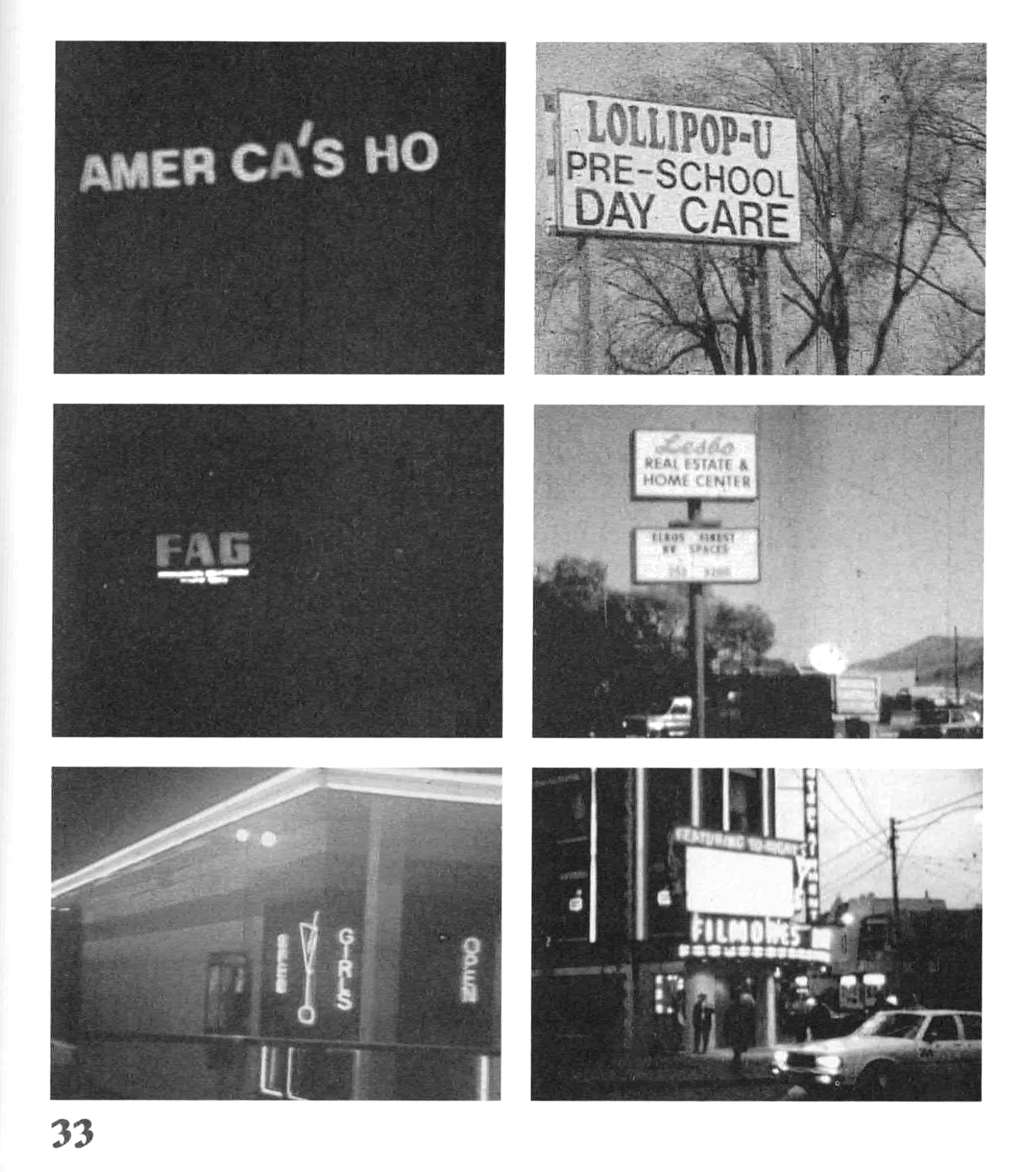
There are lots of references in Lollipop to vernacular typography, or what I’d call typography in drag. There are so many examples: Lesbos Real Estate, America's Hoe, or Hot Dogs, or Dairy Queen. There are all these signs that obviously mean something else in straightland, but you were reading them in another way.
GBJ
For sure. This is something I talk about with my collaborator and friend Paul P. We're of a generation where queer people developed a way of communicating with each other through a kind of queer code. I don't know if straight people can relate to this in any way, because I don't think they've ever had a comparable situation. When you're talking on the street you have to talk with your friends in a kind of a code to avoid being physically assaulted. This goes back a century, probably even longer. For example, in the UK, queers developed Polari, this sort of slang dialect. So I was referring to that when I included those different signs: for queer people, you have to read the code. But I don’t think people use this nowadays, do they? Do younger people even have to use coded language like this any more?